By Jack Doueck
I came back from EMC25 — the 25th Semi-Annual Energy Marketing Conference — a little tired but incredibly energized about the future of our sector.
I heard over and over from attendees this was one of the best conferences we’ve done. This conference’s theme was The Power Shift: Redefining Competitive Energy Markets — Insights, Tools, and Leadership, and the program delivered on that promise. Eleven panels. Five Fastball Pitch sessions. Two keynotes. One Executive Talk. Sixty-five speakers who didn’t waste anyone’s time.
The topics covered were exactly what this industry needs to be wrestling with right now: market design and growth pathways, emerging retail choice states, AI in action, the war on fraud, the future of ERCOT under SB-6, the broker-supplier relationship, the Women’s Energy Alliance panel, and the CEO Roundtable, among others.
But as always, the real value wasn’t just the agenda — it was the quality of thinking in the room. The people in our industry are so impressive–smart, thoughtful, innovative, and ready to solve problems.
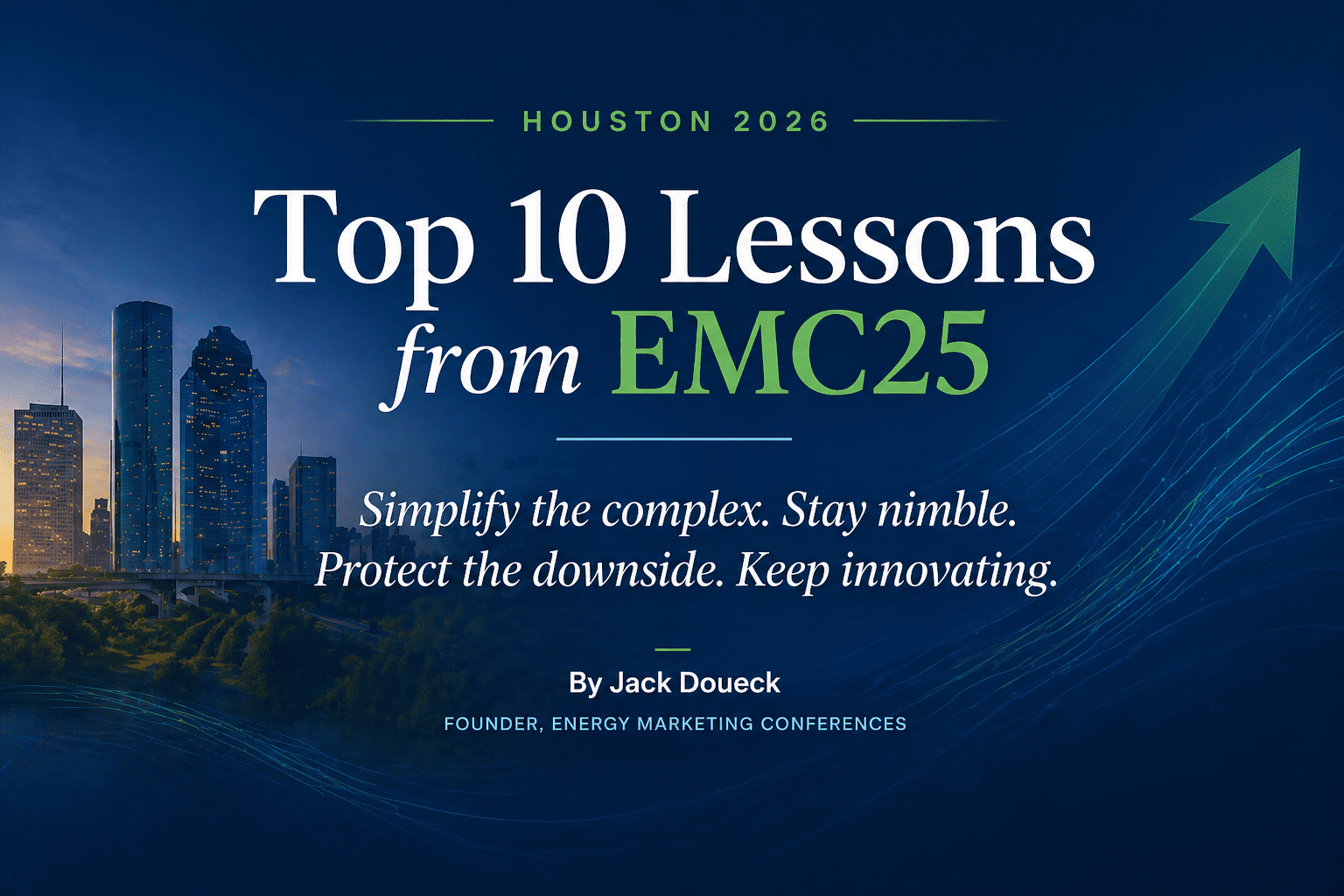
Here are my ten biggest takeaways. In my view, the companies that execute consistently on these principles will be the leaders of the next decade in retail energy.
1. Simplify the complex for your customers.
This industry can be confusing. That’s not an excuse — it’s an opportunity. The organizations that win will be the ones that take complexity and turn it into clarity. Simple, understandable products build trust. Trust builds retention. That chain is the whole business.
2. Stay nimble.
Markets shift. Regulations change. Customer expectations move faster than most companies do. Flexibility is not a nice-to-have anymore — it’s table stakes. The ability to pivot quickly and strategically is what separates companies that survive disruption from the ones that cause it.
3. Protect the downside.
I’ve seen too many companies chase growth without managing risk. Conservative hedging and a genuine culture of risk awareness are not boring — they’re the foundation everything else is built on. You can’t innovate your way out of a blown book.
4. Compliance is not a back-office function.
Treat it with the same seriousness as sales and marketing. The companies that embed compliance into their culture — not just their org chart — will have fewer surprises, lower costs, and a better reputation. All of which compound over time.
5. Know who your stakeholders really are.
Customers. Investors. Employees. Vendors. Brokers. Partners. Long-term value only gets created when you’re thinking about all of them — not just the ones in front of you this quarter. Short-term wins at the expense of any of these relationships tend to come back around.
6. Never stop improving.
If you’re not actively getting better — more efficient, more tech-forward, more customer-centric — you are, by definition, falling behind. This market does not reward standing still.
7. Keep innovating.
Battery storage. Smart thermostats. Demand response. Smart meter data. Time-of-use programs. The tools available to competitive retailers today are extraordinary. The companies that figure out how to turn those tools into real customer value will be the ones that demonstrate, every day, why deregulation matters.
8. Stay vigilant against fraud.
It comes from both ends — dishonest marketers and dishonest customers. The damage it does to individual companies, and to this industry’s reputation, is real. Strong controls and a culture of integrity are not optional. They’re how you protect everything you’ve built.
9. Build something you’re proud of.
The best companies I know invest in their people, mentor the next generation, and give back to the communities they serve. That’s not separate from business strategy — it is business strategy. Culture and reputation compound just like a good balance sheet.
10. Embed sustainability into how you operate.
RECs are a start. But sustainability goes deeper than what you buy — it’s about how you run your operations, what you offer customers, and how you make decisions every day. The companies that treat sustainability as a business principle, not a PR exercise, will be better positioned and, frankly, better companies.
Final Thought
EMC25 said one thing clearly, across every panel and every conversation: the future of this industry belongs to the companies that combine innovation, discipline, customer focus, and integrity. Not just one of those things — all four.
That’s the standard. It’s also the opportunity.
Save the date: EMC26 is coming to Washington, D.C. — October 19–20, 2026.
If Houston reminded us what this industry is capable of, D.C. is where we take it to the next level. Early bird registration is open now. I hope to see you there.
Jack Doueck is an energy entrepreneur and investor, and the founder of Energy Marketing Conferences. He is the host of the Energy Insider podcast and the author of several books.